


Taming the Beautiful Beast: Getting the Best from Wisteria
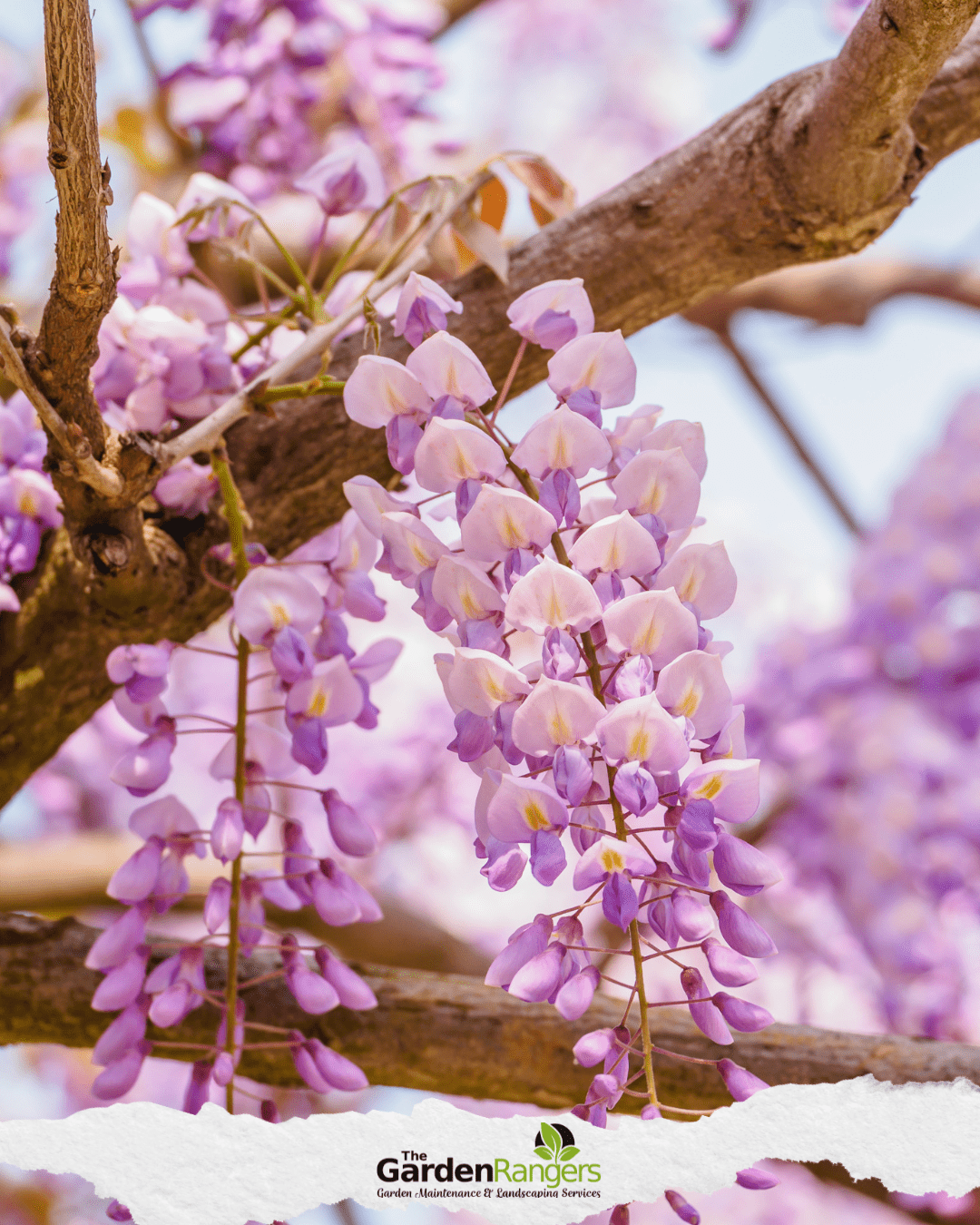
Few plants capture the romance of an English garden quite like wisteria. In full flower, it’s breathtaking. But without guidance, that same plant can quickly become a dense tangle of woody growth with very little bloom to show for it. Wisteria is incredibly vigorous, capable of producing many feet of growth in a single season, and without regular pruning that energy is wasted on length rather than flowers.
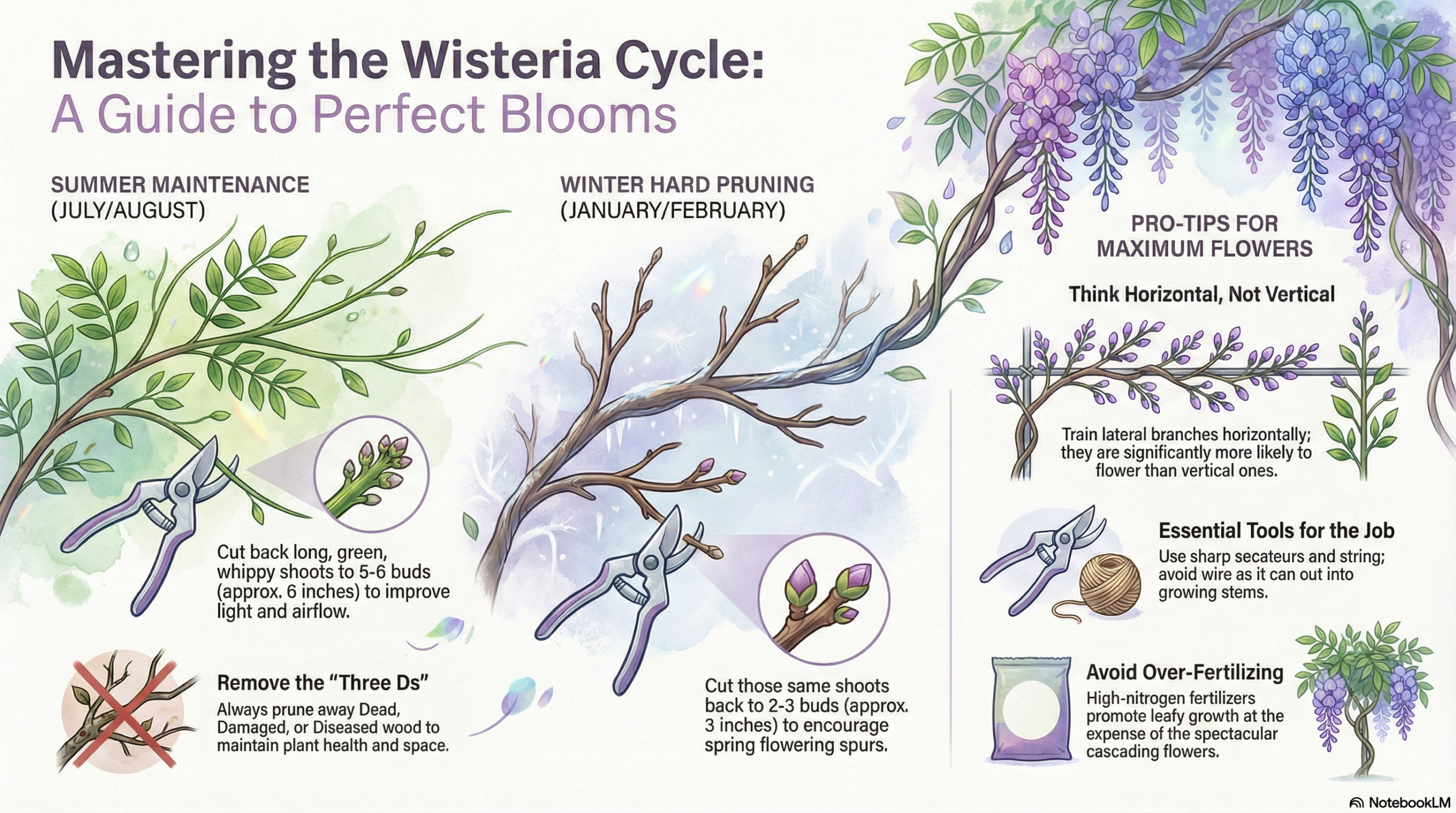
The secret is confidence. Most of what a wisteria produces each year actually needs to be cut back. Removing the bulk of those long, whippy shoots might feel drastic, but it’s exactly what encourages the plant to put its strength into building a solid, permanent framework and forming flower buds rather than endless runners.
Another common frustration is a healthy plant that simply refuses to bloom. Often, the reason lies in how it was grown. Seed-raised wisterias can take many years to reach maturity and may not flower reliably at all. Grafted varieties, on the other hand, are far more dependable and usually begin performing within a few seasons.
When training stems, softer ties are always the better choice. As the plant thickens, rigid wire can bite into the bark and cause lasting damage. Flexible ties allow for natural expansion and can be removed easily when it’s time to prune.
A good routine makes all the difference. A summer trim helps control the surge of new growth and lets light reach the plant’s inner structure. Then in winter, cutting those same shoots back harder creates the short, knobbly spurs where the flowers will form. It’s a simple rhythm that keeps the display close to the main framework rather than disappearing into the roofline.
It’s also worth remembering just how powerful an old wisteria can become. Mature stems are surprisingly strong and need proper support from the start. Once established, though, a well-managed plant can live for decades, even generations.
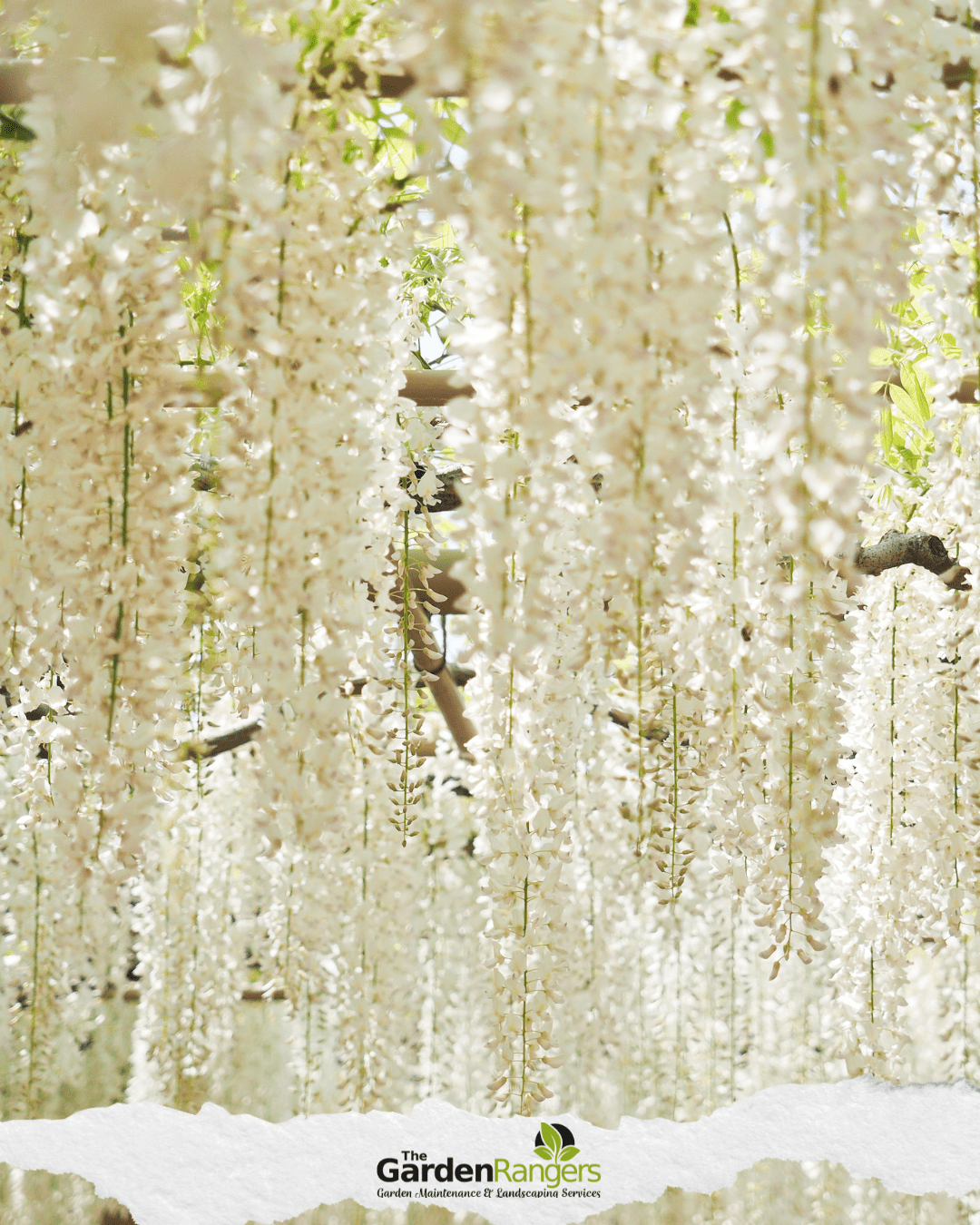
Wisteria is not a plant for instant results. It rewards patience, consistency and a steady hand. But give it structure and time, and it will repay the effort with one of the most spectacular displays a garden can offer.
 Request a callback
 View our brochure